
THE BIOLOGY OF THE DAILY GRIND™
Stress, Brain & Craving:
The Connection
People often blame stress, cravings, and weight gain as separate problems. Research increasingly suggests they’re connected through cognition, behavior, and physiology.¹¹⁻¹⁴
THE BIOLOGY OF THE DAILY GRIND™
The Daily Grind Starts in the Brain
Every stressful moment activates your body’s built-in stress response.
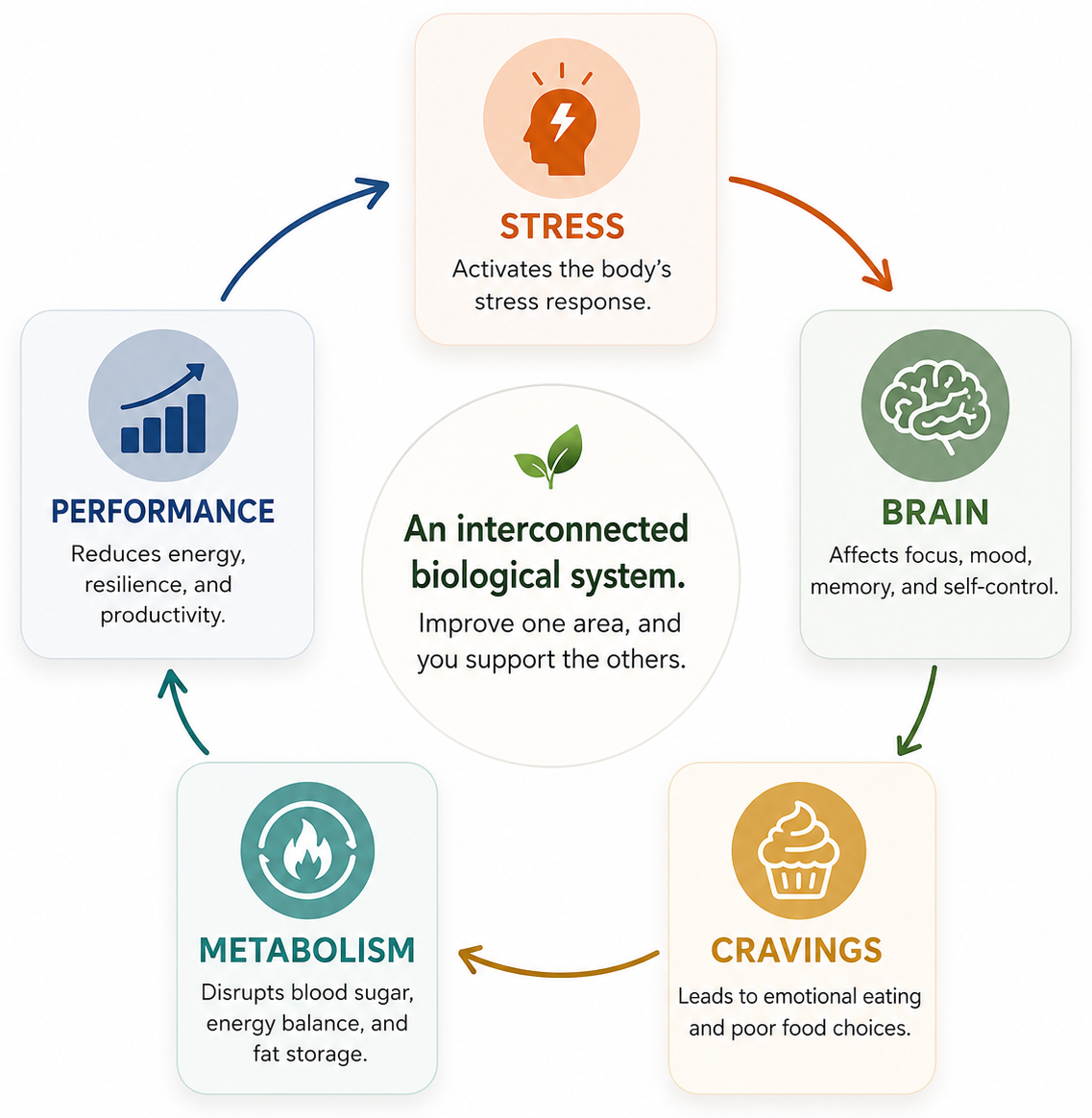
Growing scientific evidence shows that stress, cognition, appetite regulation, metabolism, and daily performance are closely interconnected rather than separate aspects of health. These biological relationships help explain many of the wellness challenges experienced throughout the modern daily grind.¹¹⁻¹⁴
Cortisol rises. → Blood sugar shifts. → Appetite signals change. → Recovery becomes harder.
What begins as a normal survival response can gradually influence how you think, what you crave, how your body stores energy, and how you perform every day.
THE STRESS & METABOLIC CYCLE
Why Stress Affects
Your Thinking
Stress doesn’t just change how you feel.
Research suggests prolonged stress can reduce activity in the brain’s prefrontal cortex—the area responsible for focus, judgment, self-control, and long-term decision-making—while strengthening pathways linked to impulsive behavior.11−14
That’s one reason healthy habits often feel harder to maintain during stressful periods.
Why Stress Increases
Cravings
Weight gain isn’t simply about eating more.
Cortisol also influences blood sugar, insulin, and where fat is stored. Prolonged stress is associated with greater storage of visceral fat around the abdomen—the type most strongly linked to metabolic disease.¹²⁻¹⁴
At the same time, chronic stress may reduce calorie expenditure and make metabolism less efficient, allowing gradual weight gain over months and years.¹²⁻¹⁴
Why Stress Can Lead
to Weight Gain
Weight gain isn’t simply about eating more.
Cortisol also influences blood sugar, insulin, and where fat is stored. Prolonged stress is associated with greater storage of visceral fat around the abdomen—the type most strongly linked to metabolic disease.¹²⁻¹⁴
At the same time, chronic stress may reduce calorie expenditure and make metabolism less efficient, allowing gradual weight gain over months and years.¹²⁻¹⁴
One Biological System. Many Daily Challenges.
Brain fog. Cravings. Energy crashes. Weight gain. Reduced performance. They often feel like separate problems. Modern biology suggests they’re connected.
Stress Is Part of Modern Life
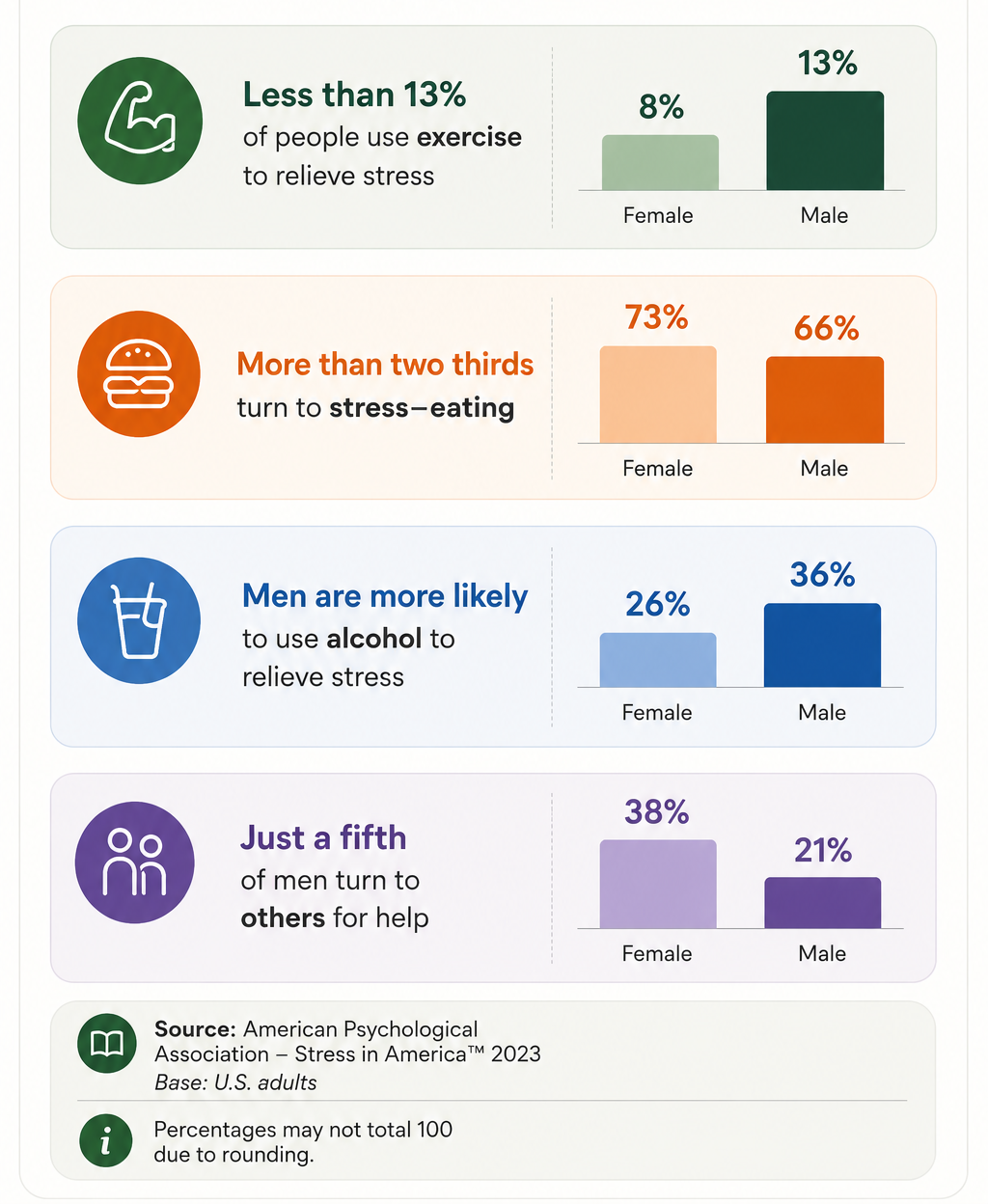
You’re not alone. Millions of people live with daily stress, often relying on habits that provide temporary relief but can unintentionally reinforce the cycle.
Why Modern Wellness Often
Treats Them Separately




THE NEXT EVOLUTION IN FUNCTIONAL BEVERAGES™
One Daily Ritual.
Two Connected Goals.
Most functional products are designed to support either cognitive performance or metabolic wellness.
But modern life doesn’t separate the two.
When stress influences how you think, eat, and perform, supporting only one side of the equation may leave the other behind.
That’s why we believe a new approach is needed.